

Purpose: To evaluate and compare the impact of the long-term use of medication to reduce intraocular pressure on the biomechanical properties of the cornea.
Material and methods: A study sample of 305 eyes of 154 patients newly diagnosed with primary open angle glaucoma (POAG, n = 68) or ocular hypertension (OH, n = 6) was included in a prospective cohort study. The control group comprised 80 untreated eyes of 40 patients with ocular hypertension and 80 eyes of 40 patients with no ocular pathology. The following parameters were evaluated: intraocular pressure (IOPg, IOPcc), hysteresis (CH), corneal resistance factor (CRF) and central corneal thickness (CCT). The parameters were evaluated at baseline (untreated) and at follow-up intervals of 3, 6, 9 and 12 months. The same schedule was used for the eyes in the control group. Eyes with POAG or OH were divided into two sub-groups, depending on the type of applied medication: prostaglandin analogues, carboanhydrase inhibitors alone or in combination with beta-blockers.
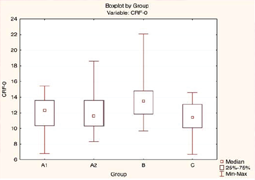
Results: We did not demonstrate any statistically significant difference in hysteresis in patients with newly diagnosed POAG (as yet untreated) in comparison with the normal eyes in the control group (p = 0.238). We demonstrated significantly higher values of CRF (p = 0.032) and CCT (p = 0.013) in the control group of untreated patients with ocular hypertension. This result confirms a higher number of patients with stiffer and thicker corneas. A statistically significant difference of CH and CRF was demonstrated (p < 0.0001) in eyes treated by prostaglandin analogues during the follow up period. In these eyes we also demonstrated a reduction of CCT (p < 0.001). We did not record any other statistically significant change in the remaining observed parameters.
Conclusion: The increase in CH and CRF may demonstrate a change of the biomechanical properties of the cornea following the long-term use of prostaglandin analogues. The biomechanical properties of the cornea were not impacted upon by carboanhydrase inhibitors. Further studies are required in order to establish the effect of the long-term use of prostaglandin analogues on the accuracy of IOP measurements.