
2015 - 4 Issue

Original article

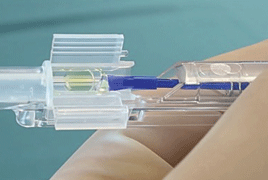
Evaluation of the Clinical Results of Implantation the Hydrophobic Intraocular Lens CT LUCIA 601P

Full Text links

Summary

Purpose: To evaluate the properties and clinical outcomes after implantation the new hydrophobic intraocular lens CT LUCIA 601P in patients undergoing routine cataract surgery.

Material and Methods: The study included 38 patients (43 eyes), mean age 70 ± 8 years (range 56–91 years) with senile cataract. After phacoemulsification intraocular lens CT LUCIA 601P was implanted. Patients were evaluated at 4 months after surgery. We assessed uncorrected visual acuity (UCVA), best corrected visual acuity (BCVA), refraction, keratometry and the incidence of posterior capsule opacification (PCO – Posterior capsule opacification).

Results: Before surgery the mean UCVA was 0.3 ± 0.18 and four months after surgery was 0.7 ± 0.15. The mean BCVA before surgery was 0.58 ± 0.21 and after surgery was 0.94 ± 0.08. PCO value was 0.199 ± 0.05, that means minimal incidence of PCO.

Conclusion: The new hydrophobic intraocular lens CT LUCIA 601P could be easily implanted and after surgery shows a high degree of biocompatibility in patients undergoing routine cataract surgery.

References

  1. Brown, D.M, Campochiaro, P.A., Singh, R.P. et al.: Ranibizumab for macular edema following central retinal vein occlusion: six-month primary end point results of a phase III study. Ophthalmology, 117, 2010, 6: 1124–33.
  2. Campochiaro, P.A., Heier, J.S., Feiner, L. et al.: Ranibizumab for macular edema following branch retinal vein occlusion: six-month primary end point results of a phase III study. Ophthalmology, 117, 2010, 6: 1102–12.
  3. Capone, A., Singer, M.A., Dodwell, D.G. et al.: Efficacy and safety of two or more dexamethasone intravitreal implant injections for treatment of macular edema related to retinal vein occlusion (SHASTA study). Retina, 34, 2014, 2: 342–51.
  4. Coscas, G., Augustin, A., Bandello, F. et al.: Retreatment with for Ozurdex
  5. Coscas, G., Loewenstein, A., Augustin, A. et al.: Management of retinal vein occlusion--consensus document. Ophthalmologica, 226, 2011, 1: 4–28.
  6. Haller, J.A., Bandello, F., Belfort, R. Jr. et al.: Dexamethasone intravitreal implant in patients with macular edema related to branch or central retinal vein occlusion twelve-month study results. Ophthalmology, 118, 2011, 12: 2453–60.
  7. Heier, J.S., Campochiaro, P.A., Yau, L. et al.: Ranibizumab for macular edema due to retinal vein occlusions: longterm follow-up in the HORIZON trial. Ophthalmology, 119, 2012, 4: 802–9.
  8. http://www.sukl.cz/ modules/medication/detail. php?code=0167756&tab=prices
  9. Joshi, L., Yaganti, S., Gemenetzi, M. et al.: Dexamethasone implants in retinal vein occlusion: 12-month clinical effectiveness using repeat injections asneeded. Brit J Ophthalmol, 97, 2013, 8: 1040–4.
  10. Querques, L., Querques, G., Lattanzio, R. et al.: Repeated Intravitreal Dexamethasone Implant (OZURDEX®) for Retinal Vein Occlusion. Ophthalmologica, 229, 2013, 1: 21–25.
  11. The Branch Vein Occlusion Study Group: Argon laser photocoagulation for macula edema in branch vein occlusion. Am J Ophthalmol, 98, 1984: 271–82.
  12. The Branch Vein Occlusion Study Group: Argon laser scatter photocoagulation for prevention of neovascularization and vitreous hemorrhage in branch vein occlusion. Arch Ophthalmol, 104, 1986: 34–41.