
2016 - 2 Issue

Original article

Pharmacological Tests for Horner Syndrome Case Report

Full Text links

Summary

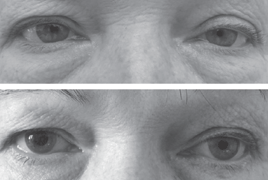
The case report presents a patient, who was examined at our department due to anisocoria that was present for more than one year. Besides the anisocoria the patient had no other pathological symptoms. The pupil on the right eye was larger than on the left eye by more than 1mm. Photoreaction was present on both eyes with a dilatation deficit on the left eye. There was also a slight ptosis on the left. The anterior and posterior eye segment was normal, only the iris of the left eye was slightly decoloured. The ophthalmological finding was pointing to Horner syndrome on the left side. The cause of the syndrome was not found. The case report discusses current problems of pharmacological pupillary tests used in Horner syndrome. Alternatives to the standard cocaine test are proposed, with respect to substances currently available in the Cz ech Republic.

References

  1. Cooper-Knock, J., Pepper, I., Hodgson, T. et al.: Early diagnosis of Horner syndrome using topical apraclinidine. J Neuro-Ophthalmol, 31, 2011: 214–216.
  2. Davagnanam, I., Fraser, CL., Miszkiel, K. et al.: Adult Horner´s syndrome: a combined clinical, pharmacological, and imaging algorithm. Eye, 27, 2013: 291–298.
  3. Danesh-Meyer, HV., Savino, P., Sergott, R.: The correlation of phenylephrine 1% with hydroxyaphetamine 1% in Horner´s syndrome. Br J Ophthalmol, 88, 2004, 4: 592–593
  4. Dewan, MA., Harrison, AR., Lee, MS.: False-negative apraclonidine testing in acute Horner syndrome. Can J Ophthalmol, 44, 2009: 109–110. ophthalmology. Philadelphia, Lippincott Williams&Wilkins, 2004, s. 660.
  5. Falzon, K., Jungkim, S., Charalampidou, S. et al.: Denervation supersensitivity to 1% phenylephrine in Horner syndrome can be demonstrated 10 days after the onset of symptoms. Br J Ophthalmol, 93, 2009: 130.
  6. Freedman, KA., Brown, SM.: Topical apraclonidine in the diagnosis of suspected Horner syndrome, J Neuroophthalmol, 25, 2005: 83–5.
  7. Kawasaki, A., Borruat, F X.: False negative apraclonidine test in two patients with Horner syndrome. Klin Monatsbl Augenheilkd, 225, 2008: 520–522.
  8. Miller, N.: The autonomic nervous system. In Miller, NR., Newman, NJ. (Eds), Walsh and Hoyt´s clinical neuro-
  9. Mughal, M., Longmuir, R.: Current pharmacologic testing for Horner syn- drome. Current Neurology and Neuros- cience Reports, 9, 2009: 384–389.
  10. Otradovec, J.: Zornice. In Otradovec, J. (Ed), Klinická neurooftalmologie. Praha, Grada Publishing, 2003, s. 142–154.
  11. Wilhelm, H., Wilhelm, B.: Diagnostik von Pupillenstörungen. In Schiefer, U., Wilhelm, H., Zrenner, E., Burk, A. (Eds), Praktische Neuroophthalmologie. Heidelberg, Kaden Verlag, 2003, s. 53–66.
  12. Wilhelm, H., Tonagel, F ., Heine, C.: Was tun bei Horner-Syndrom? Z prakt Augenheilkd, 35, 2014, 3: 119. in the case of suspicion of Horner syndrome to perform a test with 1% phenylephrine solution or 1% adrenaline. If Horner syndrome is confirmed, in the Czech Republic patients are most often sent from the ophthalmological centre to a neurologist, who should attempt to detect the possible cause of Horner syndrome on the basis of the anamnesis and accompanying symptoms, and according to this indicate further examinations, most com-